Showing posts with label awareness. Show all posts

Friday, 16 October 2015

My OCD Story.

You're laying there, in bed. It's 5am, and you know you need sleep, your body needs rest, it needs to recover from a day of anxiety. But instead your mind is going over and over and over. It's one thought normally, sometimes more. And it's horrible. It's an ugly thought. A scary thought. Your heart is pounding, you can feel your body covered with a cold sweat, but your legs can't move glued to the bed in terror. The thought seems so much more than just that - a thought - it's an image. It's something you feel is going to happen because you haven't done something. You turned the wrong way in the shower. You didn't scrub that particular part of your hand when you last washed them. The image becomes more and more vivid, brighter, yet more evil in substance. It consumes you, it makes you believe this is it, it will only be this way, because you have done something that's wrong, incorrect. You bad person. You awful person. You terrible person.

Heavy stuff, hey?

Yeah, OCD isn't all about the hand-washing. And I think we're starting (and I use that term very loosely) to understand that as a society. But yet, so many people think Obsessive-Compulsive Disorder is purely excessive hand-washing and a fear of germs. Sure, for some people, it may be that. But understanding OCD only to that extent actually has quite a negative impact for OCD sufferers.

Watch this short video before you go any further to debunk some myths.


Here's my story - I got diagnosed with OCD in 2006 (though I have displayed symptoms since the age of seven and wasn't told I had been diagnosed with OCD until 2014). It's manifested in different ways as I've grown up, from hair pulling, to very very very scary hallucinations. I never understood what I was going through to be honest, and when I finally got told my official diagnosis in 2014, I kind of told them to take it back. I didn't want the label. OCD? I didn't have that! Sure I was petrified of sickness, my hands looking like something that should belong to a reptile family, and yeah, I was obsessed with balance and karma and constantly felt I had done something wrong... but that wasn't OCD... was it?

Thankfully, I had a brilliant psychiatric doctor who explained OCD to me, put an end to the misconceptions I had in my head, and organised a treatment plan for me. I went away with all this bumbly confusion in my head, very upset still to have been given such a diagnosis. But after doing some research, talking to my care coordinator and taking some time to let it sink in, I realised I did have this illness and it was time to accept it.

OCD has, unfortunately, taken control of my life to quite a debilitating level. It is centred around germs, sickness and illness predominantly, but there's also a lot of balancing and karma traits involved, as well as this idea that I've always done or said something wrong, and ultimately upset someone. I'm obsessed with making sure everyone around me is alright with me, to the point where it's annoying to others.

I now have so many OCD 'quirks' that it can be difficult to get through an average day.

On a typical day, I can easily wash my hands 20 + times. If I'm at work, that probably goes up to about 30 +. If I don't do it, I feel unclean, dirty and very upset. Sometimes so distressing it will cause a panic attack. If I can't wash my hands and then I have to do something, say, have a conversation with someone, it's like an almighty war in my head which means I can seem distracted and as though I'm not listening (I'm trying to, so just bear with me).

I have to shower a certain way and then get out of a shower by moving certain ways. It sounds odd writing it, but it's now a part of me that I just have to do. If I don't? I have to start again. Yup, it can take a while to get ready in a morning...

Eating's a huge thing. Cooking meat at home? Nope, might get sick. Eating chicken or seafood when out? Nope, might get sick. And that's all without the social aspect being triggering too. What if someone is ill? What if I touch someones hand? What if they ask me to try a bit of their food? What if they want to cook for me? ARGHHHH. Too difficult, so I just end up avoiding.

My phone has to be bleached several times a week, so does my handbag. I can't step on three drains. My pillows have to be turned over before I go to sleep in case my clothes are contaminated from when I've sat on the bed. I count the syllables when people talk (big time frustrating). I will rarely take medication, even if I'm in agony, through fear it will make me ill. I chuck so much food out through fear of contamination, it's pretty disgraceful.

That's just the physical behaviours - the mental ones are worse. The thought that I'm going to hit someone when I'm driving. Over and over and over. Or that I'm going to jump out the door when the car is moving. I'm gonna do it, now, now, now, now, jump, jump, jump, jump. Think about what I'm touching, all the damn time - Have I touched that handle? Did my hand graze past something, someone? Don't touch your face, don't touch it, DON'T TOUCH IT. When I talk to other people - Do they like me? Have I said something wrong? It's me, I've done something. I didn't come out of the shower the right way, and this is the price I have to pay. If I feel tired - I must be ill. I'm 'due' illness. I deserve this. This is my punishment for being a bad person. When anything in life goes wrong - Balance, balance, balance, where's the balance? Get the control back. Punish yourself to make the bad better. Hurt. Hurt. Hurt. It's the only way to get the balance right. 

No wonder I'm so flippin' tired all the time.

OCD is genuinely a nightmare. It is exhausting, time-consuming, debilitating and at times, very lonely. It angers me so much when people say they're 'SOOOO OCD' when they have no idea whatsoever about this cruel illness, and how what they're saying is just making the lives of OCD sufferers even harder. We're fighting so many battles already, we don't want to be fighting stigma too.

We need to start teaching people about what life with OCD is like and it's the reason I'm writing this blog for OCD Awareness Week.


Thankfully, there is support and treatment out there. Having a diagnosis of OCD can be scary, but it doesn't have to make your world stop. There are lots of charities that are focused around research, raising awareness and providing specialist support. I'll list a few of my favourites below.

If you know someone living with OCD, please, be patient. The wars they are fighting in their own minds can be so tiring, and unless you have suffered with this illness, it's so difficult to put into words just how hard it can be. OCD sufferers can often recognise their behaviours are irrational, it is the illness that makes them believe that despite this, it is the way things have to be. Fortunately, it's not - CBT can help, and there are other therapies that can treat OCD too, along with medications.

For OCD Awareness Week, please start a conversation about mental health. Provide a listening ear to someone you know. Take a moment to recognise that we do not know the internal battles another individual may be facing.

For more support, please visit -

OCD-UK
Mind
OCD Action
NHS Choices


Sunday, 11 October 2015

What does dignity mean to you?

You may have noticed that yesterday, October 10, was World Mental Health Day.

Across the globe, people was striking up conversations about mental health. It was all over Twitter, trending across the world, and was being talked about on news channels and radio stations everywhere. Even Wills and Kate got involved, visiting an anti-stigma event in London, talking to young people about their experiences of mental health problems.


It was fantastic seeing so many conversations taking place, the awareness that was being raised, the stigma that was being crushed by the power of conversation. Yet we still have so far to go in terms of equality for those with a mental health illness.

The theme for this year's World Mental Health Day is 'Dignity in Mental Health.' But what does that mean exactly? What does 'having dignity' look like for the individual? How can we make it better for those living with a mental health condition?

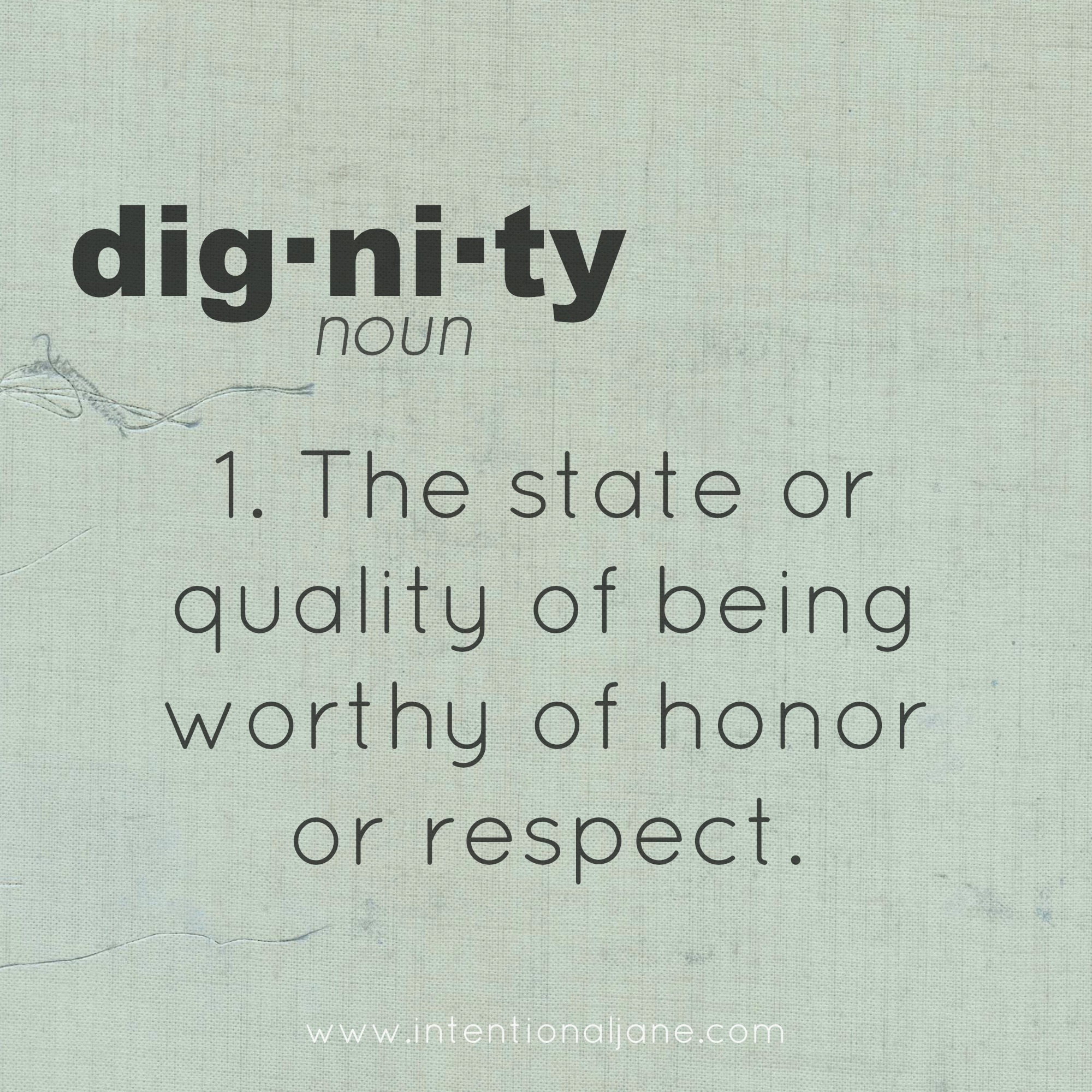
The definition of the word 'dignity', according to the Oxford Dictionary, is 'the state or quality of being worthy of honour or respect'. When I read that sentence, I find it hard to digest  that in 2015, there are individuals who wouldn't consider those suffering with mental illness worthy of respect, able to live in a society where they have freedom from being discriminated, abused or stigmatised against. But the reality is very different, and you don't have to search hard to find someone who with a diagnosed mental health illness has been treated without respect. 


From a personal point of view, I have been socially excluded because of my mental health problems. I have been treated differently from others, being made to feel I won't be able to 'handle' certain situations or that I won't be able to 'cope' with something. I have had difficult accessing health care when I have desperately needed it, with the result being a worsening of my symptoms. This of course has knocked my confidence, lowered my self-esteem and made it harder for me to be able to talk about my illness. 

What about from a wider point of view? The stigma associated with mental health means those suffering are talking less. Individuals are becoming scared to open up to their friends, family, employers or universities through fear of being treated differently and being deprived of a sustainable quality of life. The WHO even reports that some individuals with mental health problems are being subject to abuse and being deprived of making life decisions

The result? People with mental health illnesses are finding it more difficult to access work and education opportunities. Even the Work Capability Assessment has been recognised by the courts as being 'unfair' to those with mental health problems, forcing people who are unwell to have to go into work when they are unable to. With poor health care provision as well, those with mental health problems are even more likely to die prematurely. It can no longer continue to go on like this.

To me, dignity means being fully accepted into society, being given the same opportunities as every other individual in able to have a good quality of life. This, to me, doesn't seem like a lot to ask for in this day and age. I think I have been fairly lucky in comparison to some, but even in hospital I had moments where I believe I wasn't being treated in a dignified manner. 

As individuals, we can change this though. It all starts with open and honest conversations, where people do not judge one another, where the language used does not stigmatise or discriminate against people with mental health problems. This isn't a hard task for us to do, we just need to step up and do it! It's about taking a moment and thinking about what to say to someone who has disclosed to you they have a mental health problem. It's about sending a text message or offering a cuppa to someone who is struggling. It's about not excluding someone through fear that they may not be able to 'handle' it and instead, supporting them. 

Imagine the uproar there would be if the news reported an individual with another type of illness or disability being treated without their dignity in mind. It would make local, maybe even national news. It would be all over social media. But why not with mental health? Why aren't we shouting from the rooftops that things have to change? People are dying, for crying out loud. We all, as individuals, have the capacity to make a difference, even if it's a small one. It's about having an indiscriminate mind set, a listening ear and not judging someone when you're not living their life and walking in their shoes. 

Don't forget the 1 in 4 statistic. That's 1 in 4 of us who will have a mental health problem at any one time. Think of the number of friends and family you have. How many of them will be affected? Would you know what to say to someone you love with a mental illness? If you're looking for a sign to start talking about mental health, then this is it. 


I urge you, this World Mental Health Day, to do something that will help change the way the world sees mental health and it's associated illnesses. It doesn't have to be much - visit a website such as Mind, Time To Change or the Mental Health Foundation and read about common mental health problems and their symptoms. Perhaps you have a friend you know is struggling, and you could send them a text or invite them round for a cuppa. There's the option as well of sharing your own experiences and story with others to offer hope and to help others who are struggling to feel less alone.

What does dignity mean to you?